AI Agents Are Your New Attack Surface – Not Just Another Tool
AI agents are quietly becoming part of your production stack—making API calls, moving data, and acting on behalf of your team. If you treat them like chatbots instead of infrastructure, you’re creating a new attack surface with no guardrails.
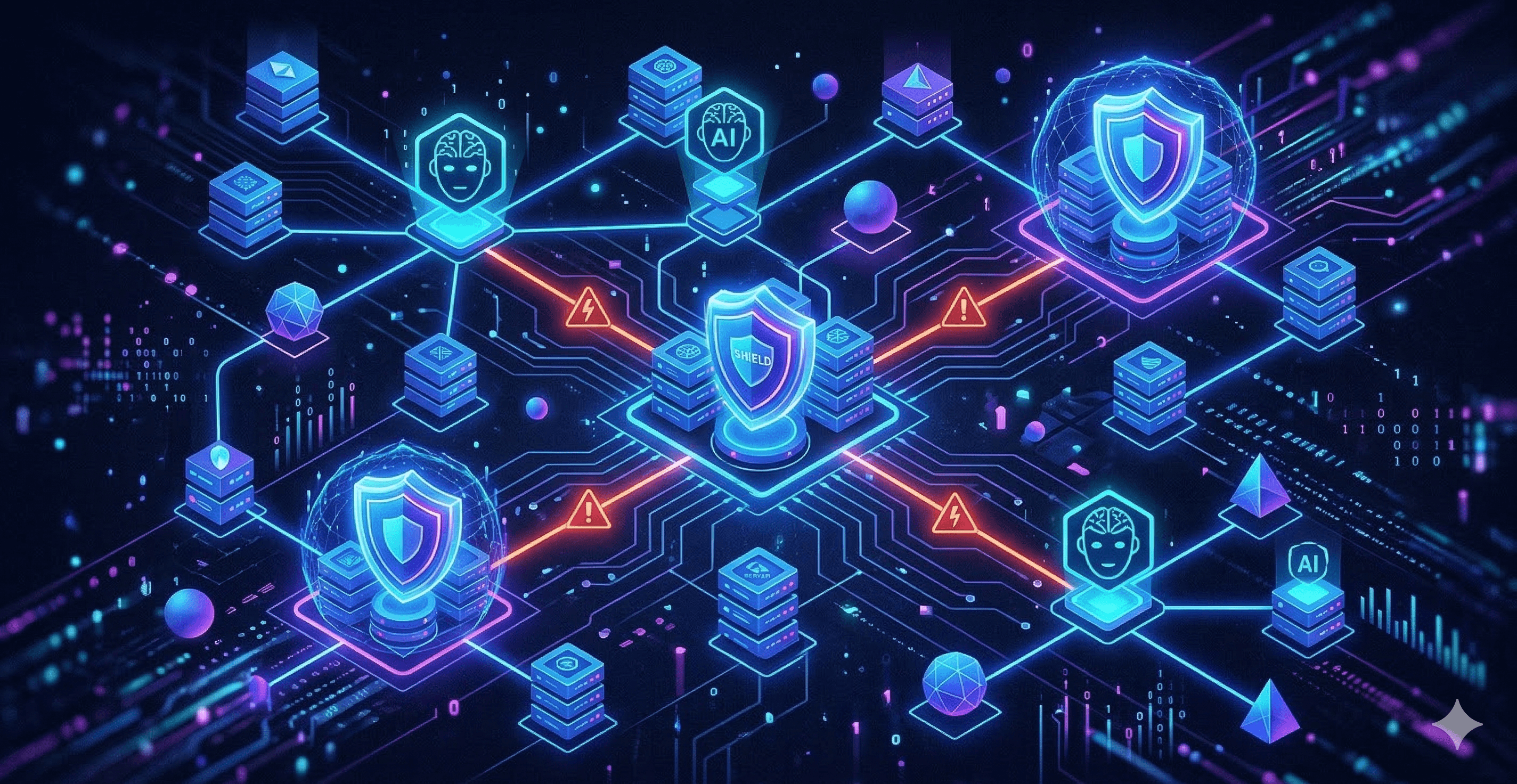
AI agents are no longer just “chatbots in a corner of your product”. They’re writing code, calling APIs, moving data between systems, triaging alerts, and even making changes to infrastructure.
In other words: they’re quietly becoming part of your production stack. If you treat them as a UX feature instead of infrastructure, you’re not just missing risk—you’re creating a new attack surface with no guardrails.
From “tool” to non-human identity
Inside most organizations, AI agents now behave like a new class of identity: they have access tokens and API keys, they can read and write data across multiple services, and they often chain tools together in ways you didn’t explicitly design.
That means every agent you introduce is effectively a non-human user in your system—running at machine speed, based on prompts and configs, not hardened policies. If you don’t model them explicitly in your threat models and IAM design, you’re flying blind.
Where AI agents expand your attack surface
AI doesn’t magically invent new classes of bugs. It amplifies the ones you already have. Key risk zones include:
- Over-permissive tool access – agents often get “god mode” access to APIs because it’s simpler to wire up. If the agent is compromised, mis-prompted, or exploited via prompt injection, it can reach far beyond the original intent.
- Hidden data exfil paths – an agent that can read from internal systems and call external APIs is a perfect data exfiltration bridge. If you don’t log what it’s sending out, you won’t notice until it’s too late.
- Prompt injection and supply-chain attacks – agents that consume untrusted content (tickets, docs, pages, emails) can be steered by that content. A crafted issue, wiki page, or API response can trick the agent into leaking secrets or making dangerous calls.
- Lack of accountability – when something goes wrong (“the AI changed this config”, “the AI closed the wrong incident”), who owns it? If you don’t know which agent did what, with which permissions, you can’t investigate or remediate properly.
What AI security posture actually looks like
Instead of treating AI security as a separate domain, think of it as applying existing security fundamentals to a new type of actor.
A realistic AI security posture for 2026 includes:
- Agent identity and lifecycle – each agent should have a clear identity: what it is, who owns it, what it’s allowed to touch. Tokens and credentials should be rotated, scoped, and revocable.
- Least privilege by default – agents get only the tools and data they truly need. Sensitive actions (deleting data, modifying infra, handling money) require additional checks, approvals, or constraints.
- Guardrails and policies, not just prompts – prompts are not security boundaries. Enforce hard rules in code and infrastructure about what endpoints the agent can hit and what fields it can read or write.
- Monitoring and audit trails – log agent actions as first-class events: which agent, what tools it called, what parameters it used. Make it possible to answer “What did our AI agents do yesterday?” in under a minute.
- Testing and chaos drills – test how your agents behave with malicious or adversarial inputs. Run tabletop exercises: “What if this agent is compromised?” and see how your detection and response hold up.
Practical steps to get ahead of AI agent risk
If you’re a CTO, head of security, or platform lead, you don’t need to pause all AI work. You need to bring it under real governance.
A practical starting list:
- Inventory all AI agents in your environment: where they run, what they connect to, what credentials they use.
- Classify their risk: read-only vs read/write, internal-only vs internet-facing, “nice to have” vs safety-critical workflows.
- Constrain their capabilities: introduce explicit allowlists for tools and APIs; wrap dangerous operations with guardrails and approvals.
- Instrument what they do: centralize logging of agent decisions and tool calls; integrate those logs into your existing monitoring and alerting.
- Educate teams: make sure engineering and security teams understand that AI agents are non-human identities, not magic helpers that sit outside policy.
Closing: AI posture is identity posture
AI agents are not just “smart assistants” glued onto your stack. They are new identities operating inside your systems, with real permissions and real blast radius.
The organizations that win with AI won’t be the ones that ship the flashiest demos. They’ll be the ones that can say, with a straight face: “We know what our agents can do, where they can reach, and how to shut them down when something goes wrong.”
Keep moving through the most relevant ideas.
Using AI Safely in Engineering Teams: Productivity Without Losing Control
AI tools can dramatically boost developer productivity—but only if you keep ownership, code quality, and security under control. Here’s how to use AI inside engineering teams without turning your systems into a black box.
Read nextDeveloper Productivity Is Mostly a Clarity Problem, Not a Tool Problem
Most engineering teams don't have a productivity problem—they have a clarity problem. Tools only help once ownership, focus time, and expectations are fixed.
Read nextWhy Security Reviews Fail Without Clear Ownership
Security findings become noise when nobody can map them to system ownership, operational habits, or a practical sequence of action.
Read next