Using AI Safely in Engineering Teams: Productivity Without Losing Control
AI tools can dramatically boost developer productivity—but only if you keep ownership, code quality, and security under control. Here’s how to use AI inside engineering teams without turning your systems into a black box.
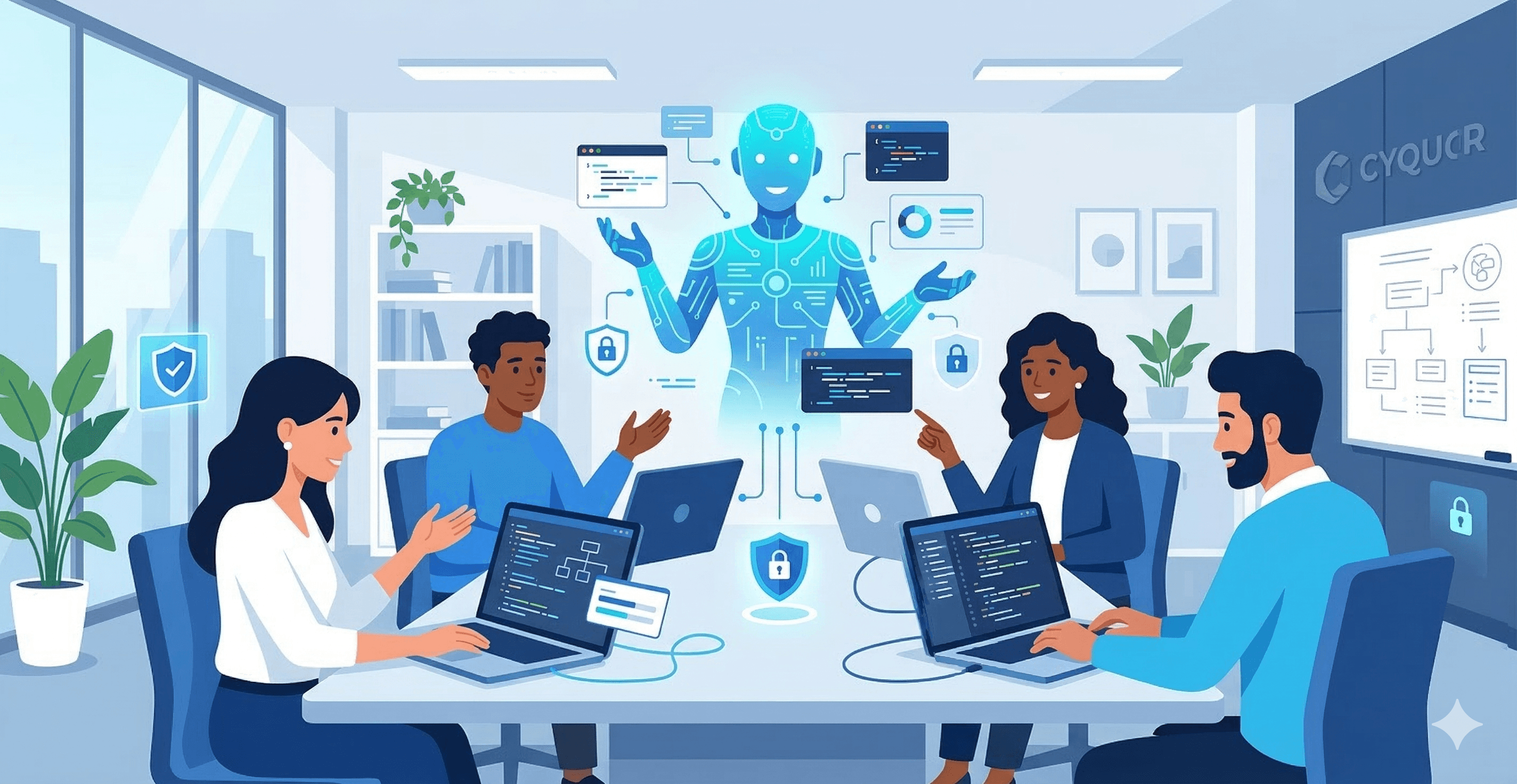
AI coding tools are now everywhere—chat-based assistants, inline suggestions, auto-generated tests, and even agents that open pull requests for you.
Used well, they remove friction and free engineers to focus on hard problems. Used poorly, they create code nobody really understands, weaken reviews, and push security risks straight into production.
What AI is actually good at in dev teams
Most of the real productivity gains come from using AI to remove low-leverage work—not from asking it to “build the whole feature”. In practice, AI is strongest at:
- Generating boilerplate and repetitive glue code
- Explaining unfamiliar code paths and libraries in plain language
- Drafting tests and edge cases that humans refine
- Helping with refactors and migration scaffolding
In all of these, humans still own the design, constraints, and final decisions. The AI accelerates execution, but it doesn’t decide what “correct” looks like.
Where AI can quietly damage your engineering culture
If you roll out AI tools with only a “go faster” message, you’ll see short-term gains and long-term problems. Common failure modes:
- Shallow understanding – developers accept AI suggestions without really understanding the code, making debugging and incident response much harder.
- Weakened reviews – reviewers trust “the AI probably knows what it’s doing” and stop applying the same scrutiny to generated code as they do to human-written changes.
- Copy‑paste vulnerabilities – models repeat insecure patterns they’ve seen in training data, and nobody catches them because it “looked reasonable”.
- Leaky prompts – engineers paste sensitive data (tokens, customer payloads, stack traces with secrets) into prompts without thinking about where that data goes.
Designing a safe AI usage policy for engineering
You don’t need a 40-page AI policy to start. You need a small set of clear rules that engineers can remember and trust.
A practical baseline for AI inside dev teams:
- AI can suggest code; humans own correctness – no change ships without a human who understands and can explain it.
- No secrets in prompts – API keys, customer data, and sensitive configs stay in secure tools, not in chat histories.
- Reviews stay real – AI-generated code gets the same level of review as any other change, especially around security, performance, and data flows.
- Logs and metrics first – when you introduce AI into a workflow, make sure you can see what it’s doing (changes, suggestions accepted, impact on incidents).
Where AI fits in the SDLC
Instead of sprinkling AI everywhere, be intentional about where it adds leverage in your software development lifecycle:
- Design & planning – summarizing stakeholder input, exploring solution options, and generating draft RFCs that humans refine.
- Implementation – scaffolding, repetitive patterns, and test generation, always reviewed by engineers familiar with the codebase.
- Maintenance – explaining legacy code, proposing refactors, and helping with migrations where humans control the final plan.
- Operations – helping triage incidents, summarize logs, and suggest potential root causes, while SREs own the actual decisions.
Leadership questions to ask now
For CTOs and heads of engineering, the goal isn’t “AI everywhere”. It’s sustainable, explainable productivity. A few questions to bring to your next leadership sync:
- Do we know where AI is already in use in our engineering teams today?
- Are we measuring impact beyond “lines of code” or “PR count”?
- Have we set clear guidelines on what must stay human-owned (architecture, security decisions, critical flows)?
- Do we have any visibility into how AI-generated code performs in production over time?
Closing: productivity with control
The teams that will win with AI aren’t the ones that generate the most code. They’re the ones that ship understandable systems faster—without handing over control of their architecture, security, or culture to a black box.
Keep moving through the most relevant ideas.
AI Agents Are Your New Attack Surface – Not Just Another Tool
AI agents are quietly becoming part of your production stack—making API calls, moving data, and acting on behalf of your team. If you treat them like chatbots instead of infrastructure, you’re creating a new attack surface with no guardrails.
Read nextDeveloper Productivity Is Mostly a Clarity Problem, Not a Tool Problem
Most engineering teams don't have a productivity problem—they have a clarity problem. Tools only help once ownership, focus time, and expectations are fixed.
Read nextWhy Security Reviews Fail Without Clear Ownership
Security findings become noise when nobody can map them to system ownership, operational habits, or a practical sequence of action.
Read next